Can Community Speed Watch volunteers give you a speeding ticket? No. Community Speed Watch volunteers cannot issue speeding fines, penalty points or fixed penalty notices. Their role is to monitor vehicle speeds, record relevant details and pass reports to the police. Drivers may receive a warning letter, while repeated or particularly serious speeding can lead to further police attention.
If you have driven past volunteers wearing high-visibility jackets and holding a speed gun, you might wonder whether you have been caught speeding, whether a letter will arrive and what happens next. This guide explains how Community Speed Watch works in the UK, what powers volunteers have, how warning letters are handled and when actual speeding penalties may apply.
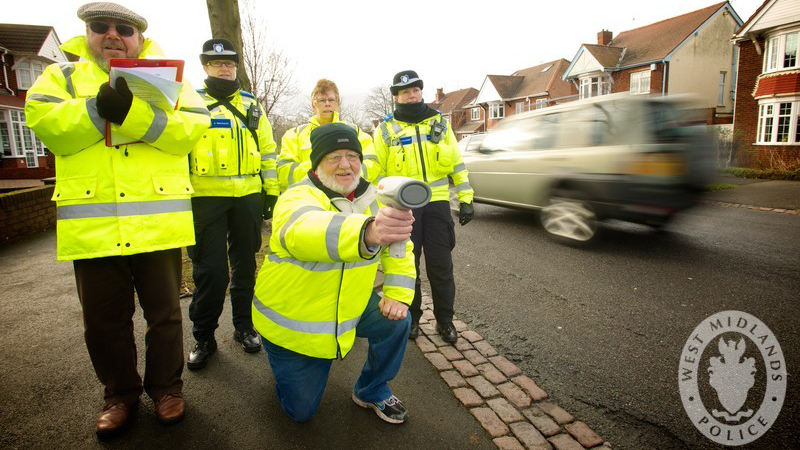
Community Speed Watch: What volunteers can and cannot do
| Question | Answer |
|---|---|
| Can volunteers issue speeding tickets? | No |
| Can volunteers give penalty points? | No |
| Can volunteers stop your vehicle? | No, not as part of their Community Speed Watch role |
| Can they record your number plate? | Yes, under the scheme’s procedures |
| Can they use handheld speed guns? | Yes |
| Can you receive a police warning letter? | Yes |
| Can repeat reports lead to police action? | Yes |
| Does a warning letter automatically mean a fine? | No |
| Can police carry out enforcement in the same area? | Yes |
The key distinction: Community Speed Watch monitoring is not the same as a police speed enforcement operation. A volunteer’s roadside reading normally leads to education or reporting, not an automatic prosecution. However, police may use the information to identify persistent speeding and decide what further action is appropriate.
What is Community Speed Watch?
Community Speed Watch (CSW) is a police-supported road safety initiative in which trained local volunteers monitor vehicle speeds in areas where speeding is a concern.
The scheme operates through participating police forces across the UK, although the name, eligibility rules and procedures can differ between areas. London also has a related initiative called Community Roadwatch.
Community Speed Watch aims to:
- Encourage drivers to observe speed limits.
- Reduce speeding concerns on residential and village roads.
- Help protect pedestrians, cyclists and other road users.
- Identify locations where additional road safety measures may be needed.
- Provide information that helps police plan education and enforcement activity.
- Give residents a practical way to support road safety in their communities.
Community Speed Watch is primarily an educational scheme. Volunteers do not replace police officers or have general traffic enforcement powers.
How does Community Speed Watch work?
Although individual police forces operate slightly different procedures, a typical Community Speed Watch session follows these steps.
1. Volunteers attend an approved location
Teams normally monitor speeds from locations assessed and approved by the police. These are often roads where residents have raised concerns about speeding.
Volunteers receive training and are usually required to wear high-visibility clothing and follow safety procedures. Session times, minimum volunteer numbers and suitable speed limits depend on local force rules.
2. Vehicle speeds are measured
Volunteers use handheld radar, laser or other approved monitoring devices to measure the speed of passing vehicles.
These devices are used for the scheme’s monitoring and educational purposes. They should not be confused with the equipment and procedures used in formal police speed enforcement.
3. Vehicle details are recorded
When a vehicle meets the local scheme’s reporting criteria, volunteers may record:
- Vehicle registration number.
- Recorded speed.
- Road speed limit.
- Date, time and location.
- Vehicle make, model and colour where required.
The precise information collected depends on the police force and its procedures.
4. The information is passed to the police
After the session, recorded vehicle details are submitted through the relevant police-approved process.
Police staff may check the registration details and determine whether a warning letter or other follow-up is appropriate.
5. Police decide whether further action is needed
For many motorists, the outcome is an advisory letter reminding the registered keeper about the speed limit.
If a vehicle is repeatedly reported, or the recorded speed is particularly concerning, police may consider additional intervention or formal enforcement activity.
Can Community Speed Watch volunteers issue speeding tickets or fines?
No. Community Speed Watch volunteers cannot issue speeding tickets, fines or penalty points.
The scheme’s normal purpose is to identify speeding concerns and encourage safer driving. Volunteers do not have the powers of police officers simply because they are participating in Community Speed Watch.
They cannot:
- Issue a fixed penalty notice.
- Add points to your driving licence.
- Demand immediate payment of a speeding fine.
- Require you to stop at the roadside as part of their volunteer role.
- Disqualify you from driving.
However, a Community Speed Watch report can inform later police action. For example, repeated reports may prompt officers to visit a registered keeper, investigate a persistent problem or conduct a formal speed enforcement operation.
For more information about formal enforcement, read our UK speed camera myths, fines and enforcement guide.
What happens if you receive a Community Speed Watch warning letter?
If volunteers record your vehicle exceeding their reporting threshold, the police may send an advisory letter to the registered keeper.
The letter will generally explain that the vehicle was observed travelling above the relevant speed threshold and encourage the driver to observe the speed limit in future.
A standard Community Speed Watch warning letter is not a speeding fine. It does not automatically result in penalty points or a court appearance.
Do you need to reply to a Community Speed Watch letter?
Usually, an ordinary advisory letter does not require a response. Read it carefully, however, because the instructions depend on the police force and the type of correspondence received.
If you believe the vehicle details are incorrect, or the vehicle was not at the stated location, contact the issuing police force using its official contact details.
Do not confuse an advisory letter with a formal Notice of Intended Prosecution or a Section 172 requirement to identify a driver. Those are separate legal processes and must be dealt with according to their instructions.
How long does a Community Speed Watch letter take to arrive?
There is no single nationwide delivery period for Community Speed Watch advisory letters. Processing times depend on when volunteers submit the information and how the local police force handles it.
The familiar 14-day rule associated with many speeding prosecutions should not be treated as a deadline for receiving a Community Speed Watch advisory letter.
What if you were not driving?
Community Speed Watch records normally identify the vehicle rather than the driver. This means the registered keeper may receive a letter even if somebody else was driving.
If the vehicle was correctly identified, you can make the person who was driving aware of the warning. If the registration, location or ownership information is wrong, contact the issuing force.
What happens if Community Speed Watch catches the same vehicle repeatedly?
Police forces may use repeated Community Speed Watch reports to identify persistent speeding and prioritise further intervention.
Possible outcomes include:
- Additional advisory letters.
- A stronger warning from the police.
- Contact or a visit from a neighbourhood policing team.
- Targeted police speed enforcement in the area.
- Further investigation where the circumstances justify it.
There is no universal three-strikes rule. The number of warnings, retention periods and escalation procedures depend on the participating police force.
For example, Norfolk and Suffolk police guidance describes an initial warning, a second warning and possible further attention for persistent offenders. Northamptonshire Police also describes follow-up visits for vehicles recorded repeatedly within its specified period.
Devon & Cornwall Police explains that Community Speed Watch does not itself result in prosecution, but information identifying persistent speeding can support further police action.
How fast do you have to be going for Community Speed Watch to record you?
Community Speed Watch reporting thresholds vary between police forces. Some schemes follow thresholds linked to National Police Chiefs’ Council guidance, while others operate their own approved recording procedures.
For example, published Norfolk and Suffolk guidance identifies the following monitoring thresholds for certain locations:
| Speed limit | Example reporting threshold |
|---|---|
| 20mph | 24mph or above |
| 30mph | 35mph or above |
| 40mph | 46mph or above, where the local scheme permits monitoring |
These are examples from published local police guidance, not a nationwide Community Speed Watch rule. Different forces may use different thresholds and may not monitor every speed-limit category.
Important: A reporting threshold is not permission to exceed the speed limit. The posted speed limit remains the legal maximum, and police enforcement decisions are separate from Community Speed Watch recording procedures.
Are Community Speed Watch speed guns the same as police speed cameras?
No. Community Speed Watch volunteers generally use handheld speed monitoring devices for educational reporting. Formal police enforcement uses its own approved equipment, procedures and evidential requirements.
| Feature | Community Speed Watch | Police speed enforcement |
|---|---|---|
| Main purpose | Education and monitoring | Enforcing speed limits |
| Operated by | Trained volunteers, sometimes supported by police staff | Police or authorised enforcement personnel |
| Equipment | Scheme-approved monitoring devices | Equipment and methods suitable for formal enforcement |
| Typical result | Warning letter or police intelligence | Possible fixed penalty, course offer or prosecution |
| Penalty points issued directly? | No | Possible through the formal legal process |
Do Community Speed Watch cameras take photographs?
Many schemes use handheld devices that display a vehicle’s speed without automatically producing a photographic enforcement record. Equipment and data collection procedures vary, so it is not accurate to claim that every Community Speed Watch device works identically.
Police speed cameras and ANPR systems perform different functions. Read our guide to ANPR cameras and what they detect.
Where and when can Community Speed Watch volunteers operate?
Community Speed Watch sessions normally take place at locations assessed and approved by the relevant police force.
Common locations include:
- Residential streets.
- Village roads.
- Roads near schools or community facilities.
- Routes with repeated complaints about speeding.
- Other locations identified through local road safety concerns.
Many schemes operate during daylight hours and require volunteers to be visible to passing motorists. Specific operating hours, approved speed limits, staffing levels and safety procedures depend on local police guidance.
For example, Northamptonshire Police operates its Community Speed Watch roadside monitoring during specified months, while Norfolk and Suffolk publish their own rules on volunteer numbers, visibility and monitoring locations.
Can Community Speed Watch volunteers hide behind bushes?
Community Speed Watch is generally designed to be visible rather than covert. Police guidance in several areas specifically requires volunteers not to conceal their monitoring activities.
If you believe a team is operating unsafely or outside its procedures, contact the local police force’s Community Speed Watch coordinator rather than confronting volunteers at the roadside.
What happens if the police catch you speeding instead?
Unlike Community Speed Watch volunteers, police can investigate speeding offences and initiate formal enforcement proceedings.
The usual minimum fixed penalty for speeding in the UK is:
- £100 fine.
- Three penalty points.
Depending on the circumstances and eligibility, a driver may be offered a speed awareness course instead of penalty points. More serious offences can be referred to court, where higher fines, additional points or disqualification may apply.
For court cases, speeding fines can reach £1,000, or £2,500 for motorway speeding offences. The amount depends on the circumstances and the applicable sentencing rules.
See the official GOV.UK speeding penalties guide and our speed camera rules and speeding fines guide.
Is a Community Speed Watch letter the same as a Notice of Intended Prosecution?
No. A Community Speed Watch advisory letter is normally educational correspondence. A Notice of Intended Prosecution (NIP) is part of the formal legal process for certain motoring offences.
Where a formal speeding allegation involves a Section 172 notice requiring driver identification, the recipient normally has 28 days to respond. Failure to comply can lead to a separate offence.
Always read police correspondence carefully and identify whether it is an advisory letter or a formal legal notice.
Why is Community Speed Watch important if volunteers cannot issue fines?
Community Speed Watch is intended to influence driver behaviour before a collision occurs, rather than relying entirely on penalties after an offence.
It can help communities by:
- Reminding drivers to check their speed.
- Making local road safety concerns more visible.
- Providing information about recurring speeding problems.
- Helping police identify locations for targeted enforcement.
- Supporting discussions about road design, traffic calming and pedestrian safety.
The Department for Transport’s THINK! road safety campaign emphasises that higher speeds reduce the time available to react and increase the risk and severity of collisions.
Even when a vehicle is travelling within the posted speed limit, drivers must adjust their speed to suit traffic, visibility, weather and road conditions.
How can you report speeding in your neighbourhood?
If speeding is a recurring problem on your road, you can contact your local police force or road safety partnership to ask about Community Speed Watch and other available measures.
Useful information to provide includes:
- The road name and location.
- The posted speed limit.
- Times when speeding is most common.
- Any particular risks to pedestrians, cyclists or other road users.
- Whether there are nearby schools, crossings or junctions.
For ongoing road design or traffic calming concerns, the relevant local highway authority may also be able to advise.
If there is an immediate danger or an emergency, use the appropriate emergency reporting route rather than waiting for a Community Speed Watch session.
How do you become a Community Speed Watch volunteer?
To volunteer, contact your local police force and search for its Community Speed Watch programme.
Depending on the force, you may need to:
- Join an existing group or help establish a new one.
- Meet the scheme’s eligibility requirements.
- Complete volunteer training and any required checks.
- Learn how to use the monitoring equipment safely.
- Follow the police force’s approved operating and reporting procedures.
Some schemes require a minimum number of volunteers and support from a parish or town council. Others have different arrangements.
For examples of how schemes operate, see Devon & Cornwall Police Community Speedwatch and Northamptonshire Police Community Speed Watch.
Community Speed Watch FAQs
Can Community Speed Watch give you points on your licence?
No. Community Speed Watch volunteers cannot issue penalty points. Points can arise through a separate formal enforcement process, not simply because a volunteer records a vehicle.
Will I get a speeding ticket if Community Speed Watch records my car?
Normally, no. A Community Speed Watch report usually results in an advisory letter where the force decides one is appropriate. Persistent reports can lead to further police attention, but a volunteer’s reading is not an automatic speeding ticket.
Can Community Speed Watch prosecute drivers?
Volunteers cannot prosecute drivers. The scheme is primarily educational, although police may use reports to support further investigation or targeted enforcement. Any prosecution is handled through the appropriate legal process.
Do Community Speed Watch volunteers have to be visible?
Many police force schemes require volunteers to wear high-visibility clothing and conduct monitoring openly. Exact rules are set by the local force.
Can volunteers stop your car?
No. Community Speed Watch volunteers do not have a general power to stop vehicles as part of the scheme. Their role is to observe, record and report.
Can Community Speed Watch operate in a 20mph zone?
Yes, where the local police force permits it. Some schemes monitor 20mph, 30mph and 40mph roads, while others restrict activity to particular speed limits.
What happens if you receive three Community Speed Watch letters?
There is no nationwide rule that three letters automatically result in a fine or prosecution. Some police forces escalate repeated reports to a neighbourhood policing team or roads policing officers. Check the issuing force’s policy.
Can a Community Speed Watch letter affect your insurance?
An ordinary advisory letter does not itself add penalty points or create a speeding conviction. Whether information must be disclosed to an insurer depends on the questions asked and the terms of the policy. Answer insurer questions accurately.
Does Community Speed Watch record the driver or the vehicle?
Community Speed Watch typically records vehicle details, including the registration number. The police may then contact the registered keeper. This does not necessarily establish who was driving.
How long do police keep Community Speed Watch records?
Retention periods vary by police force and its data protection procedures. For example, some published schemes specify retention periods of around 12 months. Contact the relevant force for its current policy.
Can I challenge an incorrect Community Speed Watch warning?
Yes. If the vehicle details, location or circumstances appear incorrect, contact the police force that issued the letter and ask how to raise a query or correction request.
Is Community Speed Watch the same as a mobile speed camera?
No. Community Speed Watch is a volunteer monitoring and education scheme. Mobile police speed cameras are used for formal enforcement and may lead to penalties or prosecution.
Related UK driving and road safety guides
- UK speed camera myths: 16 facts about fines and enforcement
- ANPR cameras explained: What they check and record
- How to remove expired penalty points from your driving licence
- UK driving licence categories and codes explained
- The UK’s most congested cities and traffic delays
Official sources and further information
- GOV.UK: Speeding penalties
- THINK!: Speeding laws and road safety
- Norfolk Police: Community Speed Watch guidance
- Lincolnshire Police: Community Speed Watch
- Devon & Cornwall Police: Community Speedwatch
- Metropolitan Police: Community Roadwatch
Bottom line: Community Speed Watch volunteers cannot issue speeding tickets, but their reports can help police identify persistent speeding problems. A standard warning letter is advisory, not a fine. The safest approach is to observe the posted speed limit and adjust your speed to suit the road conditions.
Last reviewed: November 2026. Community Speed Watch procedures vary by police force. This guide provides general UK information; check the relevant police force’s current guidance for local rules and specific correspondence.