If you’ve been flashed by a speed camera in the UK, it does not automatically mean you’ll receive a speeding ticket. The camera may have recorded a potential offence, but the evidence must be processed before enforcement action is taken. If you are the vehicle’s registered keeper, a Notice of Intended Prosecution (NIP) will normally need to be served within 14 days, subject to legal exceptions.
Whether you were driving to Gatwick Airport, travelling on the M25 or simply using an unfamiliar road, seeing a speed camera flash can leave you wondering what happens next.
This guide explains how long speeding tickets take to arrive, what the 14-day rule means, how much you could be fined, whether you might qualify for a speed awareness course and what to do if you receive a notice.
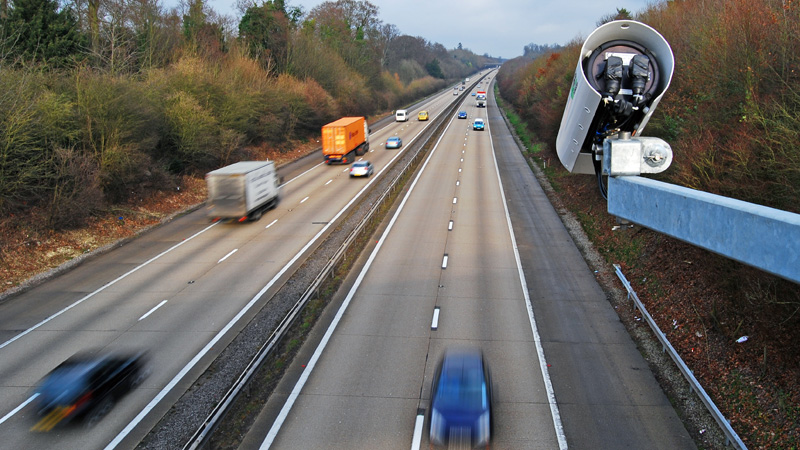
What Happens If a Speed Camera Flashes You?
A speed camera flash usually means that the equipment has activated to capture an image of a passing vehicle. However, seeing a flash is not proof that you were speeding or that a penalty will follow.
Depending on the camera system, the flash could relate to another vehicle, an equipment test or a potential speeding offence. Some cameras also record vehicles without producing a visible flash.
If an alleged speeding offence is recorded, the normal process is:
- The camera records evidence of a possible speeding offence.
- The relevant enforcement authority processes the evidence.
- A Notice of Intended Prosecution and request for driver information are normally sent to the registered keeper.
- The recipient must identify the driver within the required deadline.
- The police decide whether to offer a speed awareness course, issue a fixed penalty or refer the case to court.
It is possible to see a flash and receive no further correspondence. Equally, a camera can record a speeding offence without producing a flash that the driver notices.
How Long Does a Speeding Ticket Take to Arrive?
For most camera-detected speeding offences, the first Notice of Intended Prosecution must normally be served on the registered keeper within 14 days of the alleged offence.
This is commonly called the 14-day speeding ticket rule.
However, there is an important distinction between the first notice sent to the registered keeper and any subsequent correspondence sent to the person who was driving.
Does the 14-day rule apply to every speeding ticket?
No. The law contains exceptions, and the circumstances of the offence matter.
- You own the vehicle: If you are the registered keeper and your V5C details are correct, the initial notice will normally need to be served within 14 days.
- You drive a company car: The first notice may go to your employer or leasing company. Your own correspondence can arrive later.
- You drive a hire car: The rental company may receive the initial notice and then identify you as the driver.
- You recently bought the vehicle: The registered keeper information may not yet have been updated.
- Your V5C address is incorrect: An outdated address can complicate delivery and does not automatically invalidate enforcement.
- You were stopped by police: A warning given at the time may satisfy the notification requirement, so a separate postal NIP may not be necessary.
There are also statutory exceptions where the authorities could not identify the relevant keeper or driver with reasonable diligence, or where the driver’s own conduct contributed to the failure to serve a notice in time.
Important: If a notice arrives after 14 days, do not simply ignore it. A late notice does not automatically make the allegation invalid, and the requirement to provide driver information may still apply.
Official guidance: GOV.UK speeding penalties.
What Is a Notice of Intended Prosecution (NIP)?
A Notice of Intended Prosecution informs the recipient that prosecution is being considered for an alleged motoring offence.
For a camera-detected speeding offence, it is commonly accompanied by a Section 172 notice requiring the recipient to identify who was driving the vehicle.
The paperwork normally provides information about the alleged offence, including its date, time and location.
How long do you have to respond?
You normally have 28 days to respond to the Section 172 request and provide the required driver information.
Failing to identify the driver without a lawful defence is a separate offence that can result in six penalty points and a substantial fine.
If you were not driving, provide the information requested about the actual driver. If you genuinely cannot identify the driver, explain the circumstances and what reasonable steps you have taken to establish who was driving.
Keep a copy of your response and evidence of submission or postage.
What Happens After You Return the NIP?
Once the driver has been identified, there are three main possible outcomes.
1. Speed awareness course
For some lower-level speeding offences, the police may offer a National Speed Awareness Course instead of prosecution.
Eligibility depends on factors including the recorded speed, the circumstances of the offence and whether you have attended the same type of course within the previous three years.
If you are offered a course and complete it successfully, you will not normally receive a speeding fine or penalty points for that offence. You will, however, need to pay the course fee.
There is no automatic entitlement to a course. It is offered at the discretion of the police.
2. Fixed Penalty Notice
For a straightforward speeding offence dealt with by a standard fixed penalty, the usual outcome is:
- A £100 fine.
- Three penalty points on your driving licence.
The notice will explain how to accept the offer and the deadline for doing so. Follow those instructions carefully.
3. Court proceedings
More serious speeding offences may be referred to court. This may happen where the recorded speed is substantially above the limit, the driver has a significant number of existing penalty points or the circumstances make a fixed penalty inappropriate.
The court will consider the seriousness of the offence, relevant sentencing guidelines and the driver’s circumstances when deciding the penalty.
How Much Is a Speeding Fine in the UK?
The standard fixed penalty for speeding is £100 and three penalty points. If the case goes to court, the fine can be considerably higher and is generally linked to the seriousness of the offence and the driver’s financial circumstances.
| Outcome | Typical financial penalty | Licence consequences |
|---|---|---|
| Speed awareness course | Course fee varies by provider | No points if successfully completed |
| Standard fixed penalty | £100 | 3 penalty points |
| Band A court fine | Starting point: 50% of relevant weekly income | Normally 3 points |
| Band B court fine | Starting point: 100% of relevant weekly income | 4–6 points or a short disqualification |
| Band C court fine | Starting point: 150% of relevant weekly income | 6 points or disqualification |
For speeding offences in England and Wales, the maximum court fine is generally £1,000 on ordinary roads and £2,500 on motorways. Court costs and a victim surcharge may also apply.
The fine bands above are sentencing starting points, not fixed amounts. The court may adjust the penalty within the applicable guidelines.
See the Sentencing Council’s speeding guideline.
How Many Penalty Points Can You Get for Speeding?
A speeding offence can result in three to six penalty points, depending on the circumstances and how the case is dealt with. A court may impose a driving disqualification instead of points in appropriate cases.
Most speeding endorsements remain on the driving record for four years from the date of the offence, while points generally count towards the 12-point disqualification threshold for three years.
Drivers who accumulate 12 or more relevant penalty points within three years normally face a disqualification, subject to the applicable legal rules and any court findings.
New drivers: If you accumulate six or more penalty points within two years of passing your first driving test, your licence can be revoked under the new-driver rules.
You can check your licence details using the official DVLA driving licence service.
Types of Speed Cameras in the UK (and How They Work)
Several types of speed cameras are used on UK roads. Some measure speed at a single location, while others calculate average speed over a longer distance. Here’s how to recognise the main types.

Gatso Speed Cameras
Traditional Gatso cameras are often found in yellow roadside housings. They typically measure speed using radar and may capture two photographs at a known interval to provide supporting evidence.
Visible flash: Often, particularly with older rear-facing models.

Truvelo Speed Cameras
Truvelo cameras can monitor approaching vehicles and use approved speed measurement technology. Some models capture an image of the front of the vehicle.
Visible flash: Depends on the camera model and illumination system.

Average Speed Cameras
Average speed cameras use number plate recognition and timestamps to calculate a vehicle’s average speed between monitoring points. They are commonly found in roadworks and on longer stretches of road.
Visible flash: Usually not noticeable.

Mobile Speed Cameras
Mobile speed cameras may be operated from roadside vans, portable installations or handheld equipment. Police and safety camera partnerships use these systems to monitor vehicles at different locations.
Visible flash: Often none.
Motorway Speed Cameras
Motorway enforcement systems, including HADECS cameras, can monitor vehicles travelling above the applicable speed limit. They may enforce mandatory variable speed limits or the national speed limit when no lower restriction is displayed.
On motorways with variable mandatory speed limits, drivers must obey the speed displayed within a red circle on the overhead signs. Cameras may also enforce the applicable national speed limit when no lower mandatory limit is displayed.
Remember that cameras used for traffic monitoring or automatic number plate recognition are not necessarily speed enforcement cameras.
Can You Get a Speeding Ticket Without Seeing a Flash?
Yes. Many digital, average-speed and mobile enforcement systems can capture evidence without producing a visible flash.
A driver may therefore receive a speeding notice even if they did not notice a camera activating.
The absence of a flash is not evidence that the vehicle was travelling within the speed limit or that enforcement equipment was inactive.
Is There a 10% Plus 2mph Speed Camera Tolerance?
You may have heard that drivers are allowed to exceed a speed limit by 10% plus 2mph before receiving a ticket.
This is not a legal allowance. Speed limits are maximum permitted speeds, and exceeding the posted limit can constitute an offence.
Police forces may use operational guidance when deciding whether to take enforcement action, but thresholds are discretionary and should never be treated as permission to speed.
For example, a 30mph speed limit means the maximum lawful speed is 30mph, not 35mph.
Can You Challenge a Speeding Ticket?
Yes. If you believe a speeding allegation is incorrect, you can challenge it through the appropriate legal process.
Possible issues might include incorrect vehicle identification, errors in the alleged offence details or a valid legal argument concerning notification.
However, receiving a notice after 14 days, being unaware of the speed limit or believing that a camera was hidden does not automatically provide a defence.
If you receive a Section 172 request, deal with the driver identification requirement separately and within the stated deadline, even if you intend to dispute the speeding allegation.
Consider obtaining independent legal advice if you believe you have grounds to challenge a prosecution.
Speed Cameras on the M23 and M25: Advice for Gatwick Drivers
Drivers travelling to Gatwick Airport frequently use the M23, M25 and surrounding A-roads. These routes can include variable speed limits, roadworks, congestion and speed enforcement equipment.
When travelling to the airport, the temptation to make up time can be particularly strong if you are running late for check-in.
However, speeding rarely solves the underlying problem. Traffic conditions, junction delays and the time needed to park or reach the terminal can all affect your journey.
To reduce the risk of delays and speeding offences:
- Check traffic conditions: Review the M23 and M25 before departure, especially during peak holiday periods.
- Allow time for parking: Off-airport parking may involve check-in and a shuttle transfer to the terminal.
- Follow variable speed limits: Pay attention to mandatory overhead signs and temporary restrictions.
- Use your vehicle’s speed limiter: Where appropriate, this can help prevent your speed from gradually increasing.
- Allow for unfamiliar roads: Follow signs carefully around Gatwick’s North and South terminals.
- Plan breaks: Fatigue can affect concentration and awareness of changing speed limits.
If you’re using Gatwick Park & Ride parking, allow sufficient time to reach the car park, check in and complete the shuttle transfer. Planning this in advance is safer than trying to recover lost time by driving faster.
For official traffic information, visit National Highways travel updates.
What Should You Do If You Think a Speed Camera Has Flashed You?
If you have seen a speed camera flash, there is no need to take immediate action at the roadside. Continue driving safely and avoid sudden braking or distraction.
Afterwards, you can:
- Make a note of the approximate date, time and location if you remember them.
- Check that your vehicle’s registered keeper details are correct.
- Watch for official correspondence without assuming that a notice will definitely arrive.
- Respond promptly if you receive a Section 172 driver information request.
- Review the available options and deadlines if a course, fixed penalty or court notice follows.
There is generally no immediate public database that lets motorists enter a registration number and reliably discover whether a speed camera has recorded an offence.
Frequently Asked Questions About Speed Camera Flashes
Does a speed camera flash always mean a ticket?
No. A visible flash does not automatically mean a speeding offence has been confirmed or that a penalty will be issued. The evidence must be processed, and the flash may relate to another vehicle.
How long after a speed camera flash will I receive a ticket?
The initial Notice of Intended Prosecution normally needs to be served on the registered keeper within 14 days, subject to exceptions. If you are not the registered keeper, your own notice may arrive later.
What if I receive a speeding ticket after 14 days?
A notice arriving after 14 days is not automatically invalid. Check who was the registered keeper at the time, whether the original notice was sent correctly and whether any statutory exceptions apply. Respond to any driver information request within its deadline.
Can a speed camera catch you without flashing?
Yes. Many modern enforcement systems use digital or infrared technology and do not produce a noticeable visible flash.
Can you get a speeding ticket for 31mph in a 30mph zone?
Exceeding 30mph in a 30mph limit is technically an offence. Police enforcement thresholds may vary, but there is no legal right to exceed the posted speed limit by a particular margin.
How much is the minimum speeding fine?
The standard fixed penalty is £100 and three penalty points. A speed awareness course may be offered instead in eligible cases, while more serious offences can result in court penalties.
Can I request a speed awareness course?
You cannot demand a course as an alternative to prosecution. Police decide whether to offer one based on eligibility and the circumstances of the offence.
Do average speed cameras flash?
Average speed cameras generally use digital number plate recognition technology and do not need to produce a visible flash to record vehicles.
Can you be fined by motorway speed cameras when no variable limit is displayed?
Yes. Motorway cameras may enforce the applicable national speed limit even when no lower mandatory variable limit is displayed.
Can I check online if a speed camera caught me?
There is no universal public service for checking whether a speed camera has recorded an offence simply by entering your vehicle registration. If enforcement action is taken, the relevant authority will normally issue formal correspondence.
The Bottom Line: What Happens After a Speed Camera Flash?
Being flashed by a speed camera does not automatically mean you will receive a speeding ticket. If an offence is recorded, the registered keeper will normally receive a Notice of Intended Prosecution within 14 days, subject to the relevant legal exceptions.
The most important thing is to respond to any official paperwork promptly. Depending on the circumstances, the outcome could be a speed awareness course, a fixed penalty or court proceedings.
If you’re driving to Gatwick Airport, allow enough time for traffic, parking and terminal transfers. Planning ahead and following the speed limit is the safest way to start your journey.
Last reviewed: 19 November 2026. This article provides general information about UK speeding enforcement, with court sentencing details primarily relating to England and Wales. It is not legal advice.